
If you love mangoes and quick, comforting desserts, mango sago (also called mango sabudana) is for you. This dessert is creamy, slightly chewy, and bursting with fresh mango flavor. It is made with small tapioca pearls (sago or sabudana), ripe mangoes, milk , some condensed milk, and a bit of sugar. The result is bright, sweet, and perfect for warm weather. It works as a light dessert after a heavy meal, a party treat, or a lovely snack for mango season.
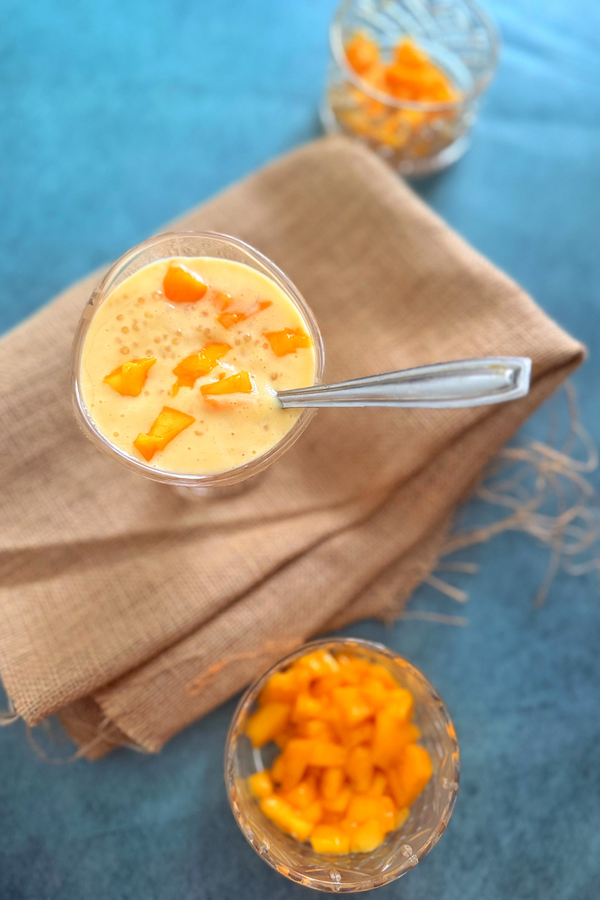
Mango sago is very popular in many Asian homes and restaurants. It feels special but it is very easy to make. You only need a few ingredients and about 15 minutes to cook the sago. This makes it a great choice when you want something fast but still delicious. The chewiness of sabudana pairs well with the smooth mango puree. You can also add chia seeds, basil seeds, or chopped nuts for texture.
Jump to:
Mango sago is also very flexible. Use it with fresh mangoes when they are ripe and sweet. If mangoes are not in season, frozen mango pulp can work well. You can serve the dessert cold or at room temperature. You can make this mango sago pudding a few hours ahead, which is great for parties. It keeps well in the fridge for a couple of days, though the texture changes slightly over time.
Why you will like this Mango Sago recipe
Quick and easy: This dessert is ready in about 30 minutes from start to finish. The steps are simple and friendly for beginners.
Fresh mango flavour: I use fresh ripe mangoes in this recipe. Fresh mango gives the best color, aroma, and taste. If you use good mangoes, you hardly need much sugar.
Creamy and light: With milk or coconut milk and a little cream, the dessert feels rich but not heavy. It is perfect for warm weather or after a spicy meal.
Texture contrast: Small sabudana pearls add a pleasant chew. Mango pulp is smooth. Nuts or seeds give crunch if you like.
Flexible and forgiving: You can easily make mango sabudana vegan, low-sugar, or use frozen mango pulp. You can scale the recipe up for a crowd.
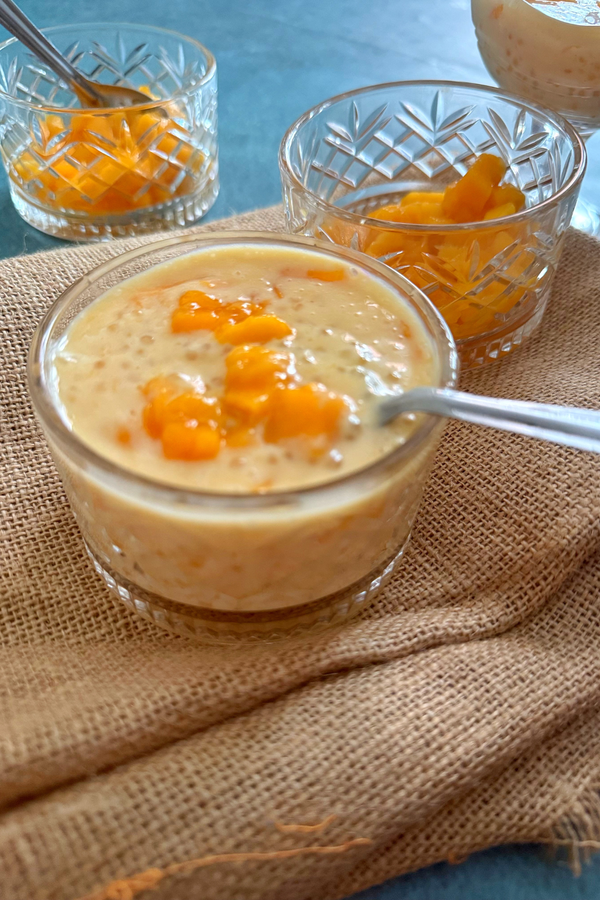
How to make Mango sago dessert?
Peel and chop the ripe mangoes. Reserve ½ cup of mango cubes for garnish.
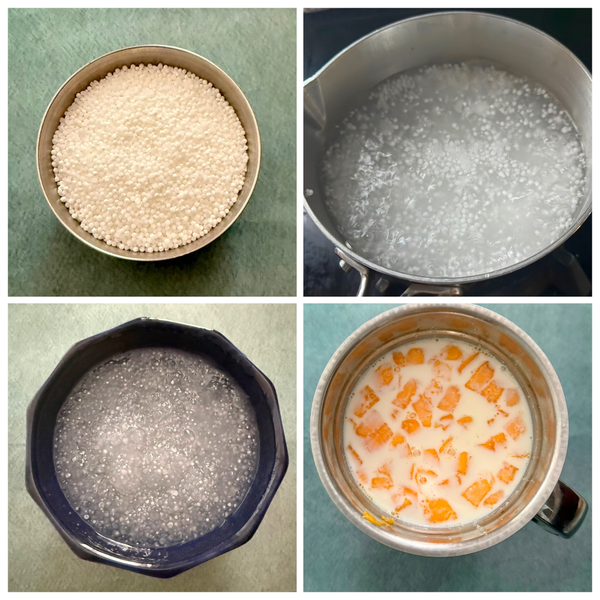
Rinse the sabudana. In a medium saucepan, bring 3 cups water to a boil. Add drained sabudana pearls slowly while stirring.
Reduce heat to medium-low and cook, stirring occasionally, until the pearls turn translucent and become soft. This usually takes 10–12 minutes for small pearls. For larger pearls, it may take 15–20 minutes.
When done, the center should be slightly translucent with no white core. If needed, cook a little longer. Do not overcook or they can become mushy.
Once done, drain the cooked water and then rinse the sago pearls under cold running water to stop cooking and remove extra starch. This helps prevent clumping. Shake off excess water.
To a blender, add 1 cup chopped mango pieces, boiled and cooled milk( room temperature or chilled), condensed milk and sugar. Blend until well combined.
Transfer this mango mixture to a bowl. Add the cooked sabudana to the bowl. Stir gently. Add chopped mango pieces. Mix gently.
Chill mango sabudana in the refrigerator for at least 1 hour. Mango sago tastes best cold.
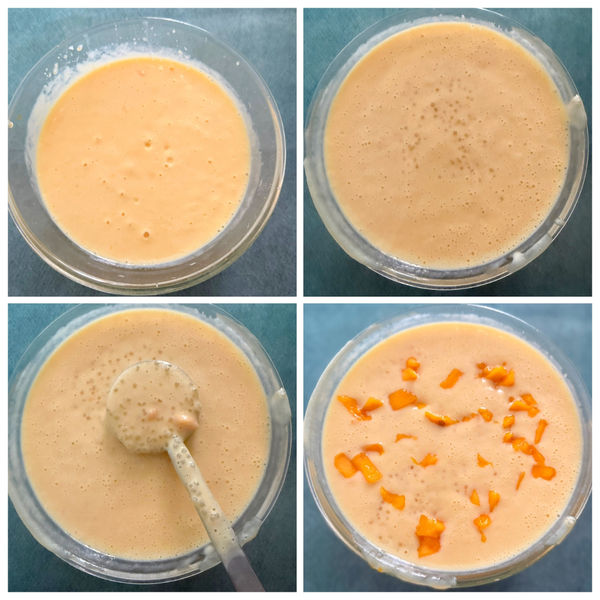
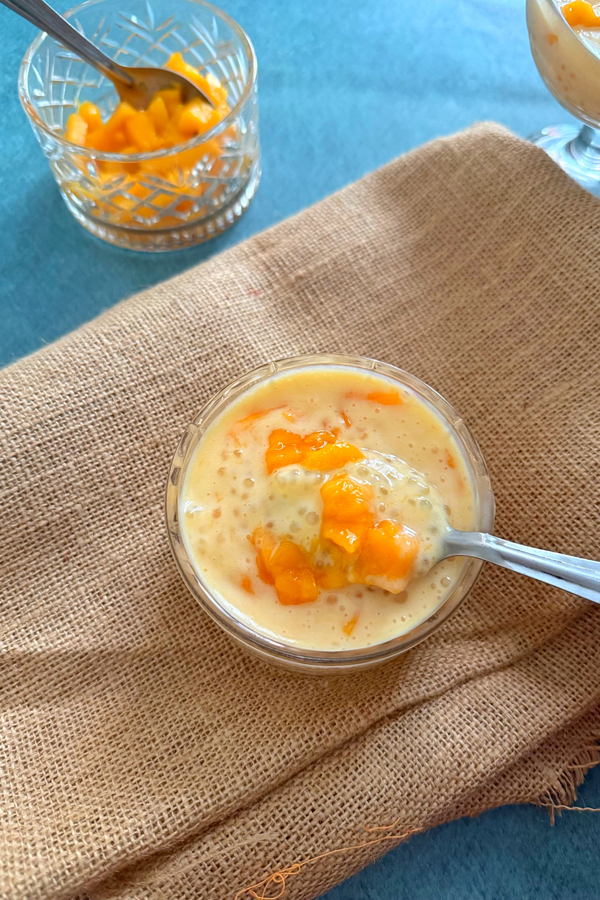
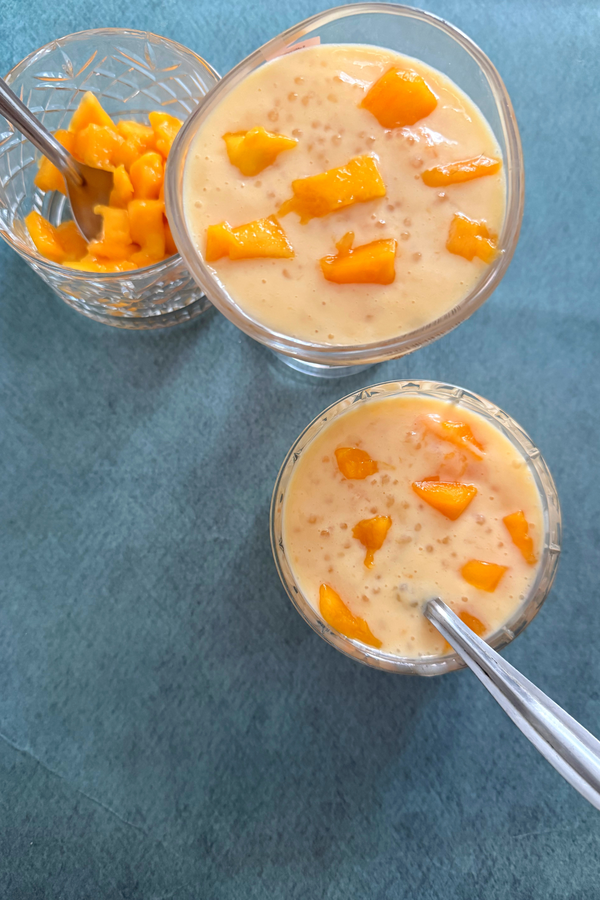
Transfer the mango sago to serving bowls. Before serving, top with mango cubes, chopped nuts, mint leaves, or a drizzle of cream.
Tips to make the best Mango Sago Recipe
Fresh ripe mangoes give the best flavour and natural sweetness. Taste the pulp before adding sugar.
Small sago pearls cook faster and give a smoother texture. If using large pearls, soak longer and cook carefully.
Rinse sago before and after cooking to prevent stickiness and clumping.
Overcooked sabudana becomes mushy. Cook until pearls are translucent with no white spot in the center.
For creamier texture, use full-fat dairy milk or canned coconut milk. Lighter milk will give a thinner result.
Do not hot sabudana to mango pulp, the mango colour and fresh taste can change.
If mango is very sweet, reduce sugar. If mango is sour, add a little more sugar or condensed milk.
Stir in chopped nuts, toasted coconut, or chia seeds for crunch and visual appeal.
You can make mango sago a few hours ahead and chill. It holds well for 1–2 days in the fridge, but texture may soften over time.
Serving Suggestions
Serve chilled in clear glasses or small bowls so the bright mango colour shows.
Top with toasted coconut flakes, chopped pistachios, or sliced almonds for crunch.
Garnish with a small mint leaf and a few mango cubes for colour contrast.
For parties, serve in shot glasses as a small dessert portion. Add a sprinkle of saffron on top for a festive touch.
Layer the mango sago with crushed graham crackers or biscuit crumbs for a quick trifle effect.
Pair with spicy Indian meals as a cooling dessert, or serve alongside light tea-time snacks.
Frequently asked questions
Yes. Taste and adjust sugar.
Small-sized sabudana pearls work best for a smooth texture. Large pearls can be used but need longer soaking and careful cooking.
Best eaten within 1–2 days. The texture will change as the sago absorbs liquid over time.
Yes. Use coconut milk or almond milk and use sweetener of your choice.
Rinse before and after cooking, avoid overcooking, and stir gently while cooking. Drain well and use a little cold water rinse after cooking.
hat means it was undercooked. Cook a bit longer until the center is translucent. If it stays hard, it may be the pearl quality—choose a better brand next time.
Yes. A pinch of ground cardamom or half a teaspoon of vanilla extract enhances flavor. Add gently and taste.
Other recipes you may like


Follow me on
If you tried this Mango Sago recipe or any other recipe on my blog, please leave a 🌟 star rating and tell me how it went in the 📝 comments below. Thanks for visiting CakeworkOrange!
Recipe Card
Mango Sago | Mango Sabudana Dessert

Ingredients
- 1 cup Sago/ Sabudana
- 1 & ½ cups Boiled milk
- ½ cup Condensed milk
- 1 & ½ cups Chopped Mango
- 3 tablespoon Sugar
Instructions
- Peel and chop the ripe mangoes. Reserve ½ cup of mango cubes for garnish.
- Rinse the sabudana. In a medium saucepan, bring 3 cups water to a boil. Add drained sabudana pearls slowly while stirring.
- Reduce heat to medium-low and cook, stirring occasionally, until the pearls turn translucent and become soft. This usually takes 10–12 minutes for small pearls. For larger pearls, it may take 15–20 minutes.
- When done, the center should be slightly translucent with no white core. If needed, cook a little longer. Do not overcook or they can become mushy.
- Once done, drain the cooked water and then rinse the sago pearls under cold running water to stop cooking and remove extra starch. This helps prevent clumping. Shake off excess water.
- To a blender, add chopped mango pieces, boiled and cooled milk, condensed milk and sugar. Blend until well combined.
- Transfer this mango mixture to a bowl. Add the cooked sabudana to the bowl. Stir gently. Add chopped mango pieces. Mix gently.
- Chill mango sabudana in the refrigerator for at least 1 hour. Mango sago tastes best when served cold.
- Transfer the mango sago to serving bowls. Before serving, top with mango cubes, chopped nuts, mint leaves, or a drizzle of cream.