
Sojji Appam is a popular sweet from Tamil Nadu and Karnataka. The word “Sojji” refers to sweet semolina (rava/sooji) mixture, and “Appam” refers to the outer dough that covers the filling. The sweet filling is made using rava, sugar, and ghee, while the outer covering is made from maida and melted butter.

The filled dough is flattened like small pooris and lightly deep-fried. The result? A golden-brown, flaky sweet that bursts with homely warmth and flavor in every bite.
Jump to:
This sojji appam reminds us that classic recipes don’t need fancy ingredients. Just everyday essentials, and a little patience. Every bite carries a taste that modern desserts can’t quite match.
If you’ve grown up in a South Indian household, chances are you’ve enjoyed the lovely aroma of Sojji Appam wafting from the kitchen during special occasions. This delicious sweet, crisp on the outside and soft inside, is a true festive delight. Made using maida, rava (semolina), sugar, and a touch of ghee, Sojji Appam is one of those traditional sweets that never fails to impress — simple yet so rich in flavour.

Back when I was in school, my grandmother used to make Sojji Appam quite often. She is known for making the best sojji appam in our family. Especially during family get together, Navaratri, Diwali, and Tamil New Year celebrations. My grandmother would always prepare a big batch, and we all would eagerly wait, hoping to grab one as soon as it was done. Even now, the aroma of freshly fried sojji appam instantly takes me back to those happy days.
Last week, I finally decided to learn this recipe from her. She stood next to me and guided me step by step. In the end, we all loved how well these turned out. This recipe combines soft, sweetened rava kesari wrapped in a maida dough and gently fried until golden brown. It’s a beautiful treat for festive times, but honestly, it’s so tasty that you’ll want to make it a lot often.
If you’re new to traditional sweets, don’t worry. Sojji Appam may sound traditional, but it’s one of the easiest festive sweets you can try. Once you understand the method, you’ll be making it often—especially after seeing how quickly they disappear from the plate!

Why you will love this Sojji Appam Recipe?
It’s a timeless South Indian classic with nostalgic charm.
The ingredients are simple and easily available in every Indian kitchen.
The texture is a perfect combination of crispy outer layer and melt-in-your-mouth sweet filling.
You can make it ahead of time, making it perfect for festivals or family get-togethers.
It tastes divine with a cup of hot filter coffee—morning, evening, or anytime!
How to make Sojji Appam?
In a mixing bowl, add maida, melted butter, a pinch of turmeric powder and combine well.
Add water little by little to make a loose dough. Add a teaspoon of oil and apply on top of the dough. This helps in maintaining the texture and helps in the dough not drying up easily. Cover and keep the dough aside for 3 or 4 hours.

Heat a pan and add little ghee.Roast the rava on low flame until it turns aromatic and light golden. Keep stirring to prevent burning.
Add boiling hot water little by little and let it come to a gentle boil. Add sugar and stir until it completely dissolves.
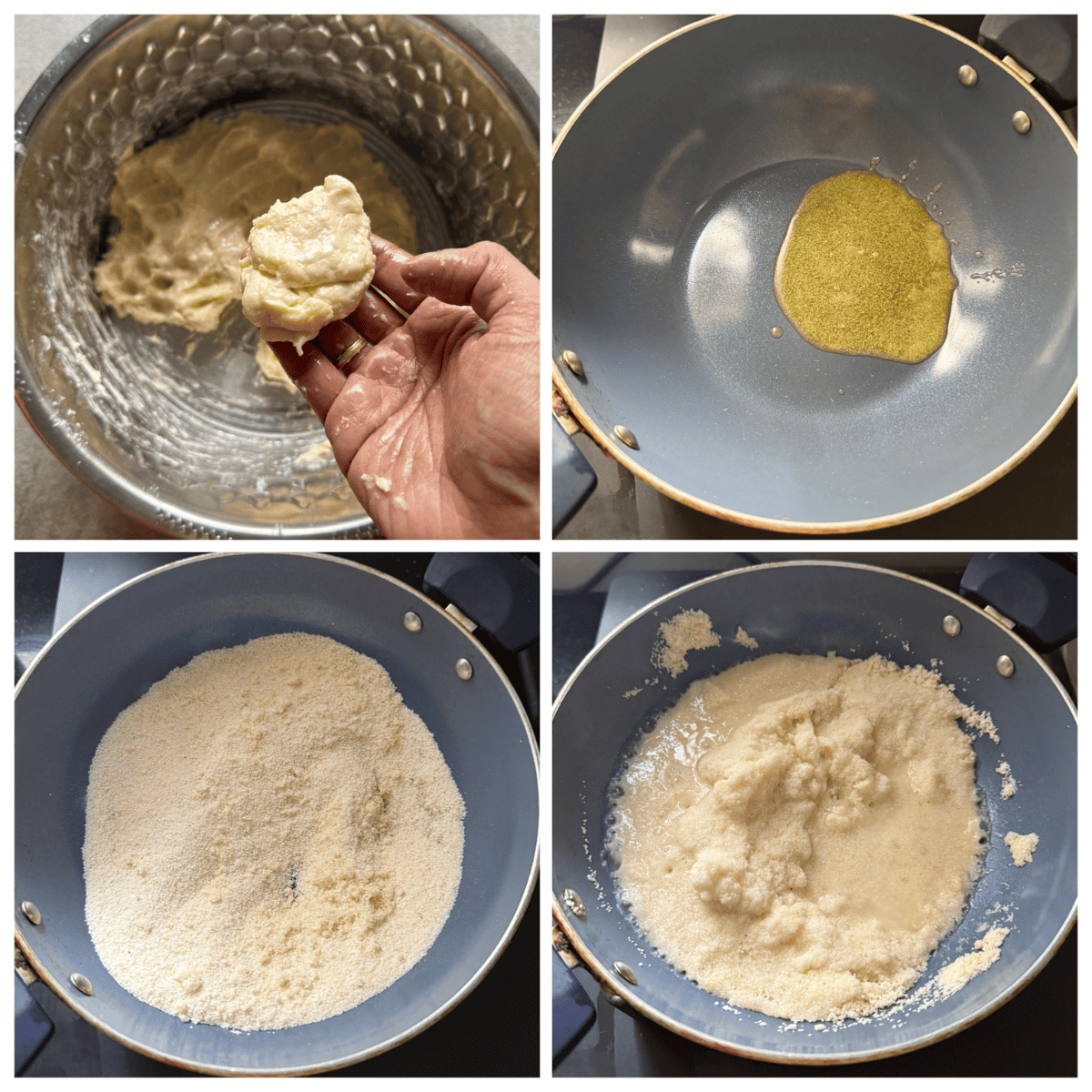
Stir continuously to prevent lumps. Cook on low flame until the mixture thickens and leaves the sides of the pan.
Remove from heat and allow it to cool completely. Once cooled, shape into small balls.

Once the resting time is over, take a small portion of dough and roll it into a small ball. The dough should be loose and easy to roll but not sticky.
Flatten it slightly on a parchment paper or ziploc cover and place a prepared sojji (filling) ball in the center.
Gently seal the edges by bringing the dough together.

Make sure the rava kesari ball is completely covered. Flatten gently into a small disc using your fingers and palm.

Heat oil in a frying pan or shallow pan over medium heat. Place one sojji appam at a time and cook on both sides until golden brown.
Press gently with a ladle so it cooks evenly. Remove and drain on tissue paper. Repeat for all sojji appams.
The kitchen will smell heavenly by now, and your Sojji Appam is ready to serve!

Serving Suggestions
You can serve the sojji appam with a hot cup of South Indian filter coffee or chai.
Serve the Sojji Appam alongside a festive thali meal as a sweet dish.
It can be made as a prasad during poojas and festive events like Navaratri or Varalakshmi Viratham.
Packed in school snack boxes or for travel—just store in an airtight container.
Variations you can try
Add a few roasted cashews in the filling for extra texture.
Replace sugar with jaggery if you prefer milder sweetness.
You can add a bit of grated coconut to the filling for an added texture and flavour.
Tips to make the best Sojji Appam
Always roast the rava patiently on a low flame for best flavour and texture.
The filling should be thick enough to hold shape. If it’s too runny, cook a little longer.
Let the filling cool completely before shaping.
You can replace maida with wheat flour for a healthier version but the texture will differ.
Apply a little oil to the outer covering dough to keep the dough flexible and not dry up.

Frequently asked questions
Yes! You can prepare the filling a day before and refrigerate it. Bring it to room temperature before stuffing and frying.
That usually happens if the filling has too much water. Cook the filling until it thickens and leaves the sides of the pan. It should cool down firm enough to roll into balls.
Either the dough is too dry or overcooked. Keep the flame on medium and make sure the dough is soft and slightly pliable.
Yes. Store in an airtight box after cooling.
Other recipes you may like


Follow me on
If you tried this Sojji Appam Recipe or any other recipe on my blog, please leave a 🌟 star rating and tell me how it went in the 📝 comments below. Thanks for visiting CakeworkOrange!
Recipe Card

Sojji Appam | Traditional South Indian Sweet

Ingredients
- 250 grams Maida
- 50 grams Unsalted Butter Melted
- ⅛ teaspoon Turmeric Powder
- Water to make the outer dough as needed
- 250 grams Rava / Sooji
- 250 grams Sugar
- 2 cups Boiling Water for the filling
- 2 tablespoon Ghee
- Oil for frying, as needed
Instructions
- In a mixing bowl, add maida, melted butter, a pinch of turmeric powder and combine well.
- Add water little by little to make a loose dough. Add a teaspoon of oil and apply on top of the dough. This helps in maintaining the texture and helps in the dough not drying up easily. Cover and keep the dough aside for 3 or 4 hours.
- Heat a pan and add little ghee. Roast the rava on low flame until it turns aromatic and light golden. Keep stirring to prevent burning.
- Add boiling hot water little by little and let it come to a gentle boil. Add sugar and stir until it completely dissolves.
- Stir continuously to prevent lumps. Cook on low flame until the mixture thickens and leaves the sides of the pan.
- Remove from heat and allow it to cool completely. Once cooled, shape into small balls. Keep it aside.
- Once the resting time is over, take a small portion of dough and roll it into a small ball. The dough should be loose and easy to roll but not sticky.
- Flatten it slightly on a parchment paper or ziploc cover and place a prepared sojji (filling) ball in the center.
- Gently seal the edges by bringing the dough together. Make sure the rava kesari ball is completely covered.
- Flatten gently into a small disc using your fingers and palm.
- Heat oil in a frying pan or shallow pan over medium heat. Place one sojji appam at a time and cook on both sides until golden brown.
- Press gently with a ladle so it cooks evenly. Remove and drain on tissue paper. Repeat for all sojji appams.
- Sojji Appam is ready to be served.